The Art of Observation
The Quiet Discipline of Attention, Perception & Design
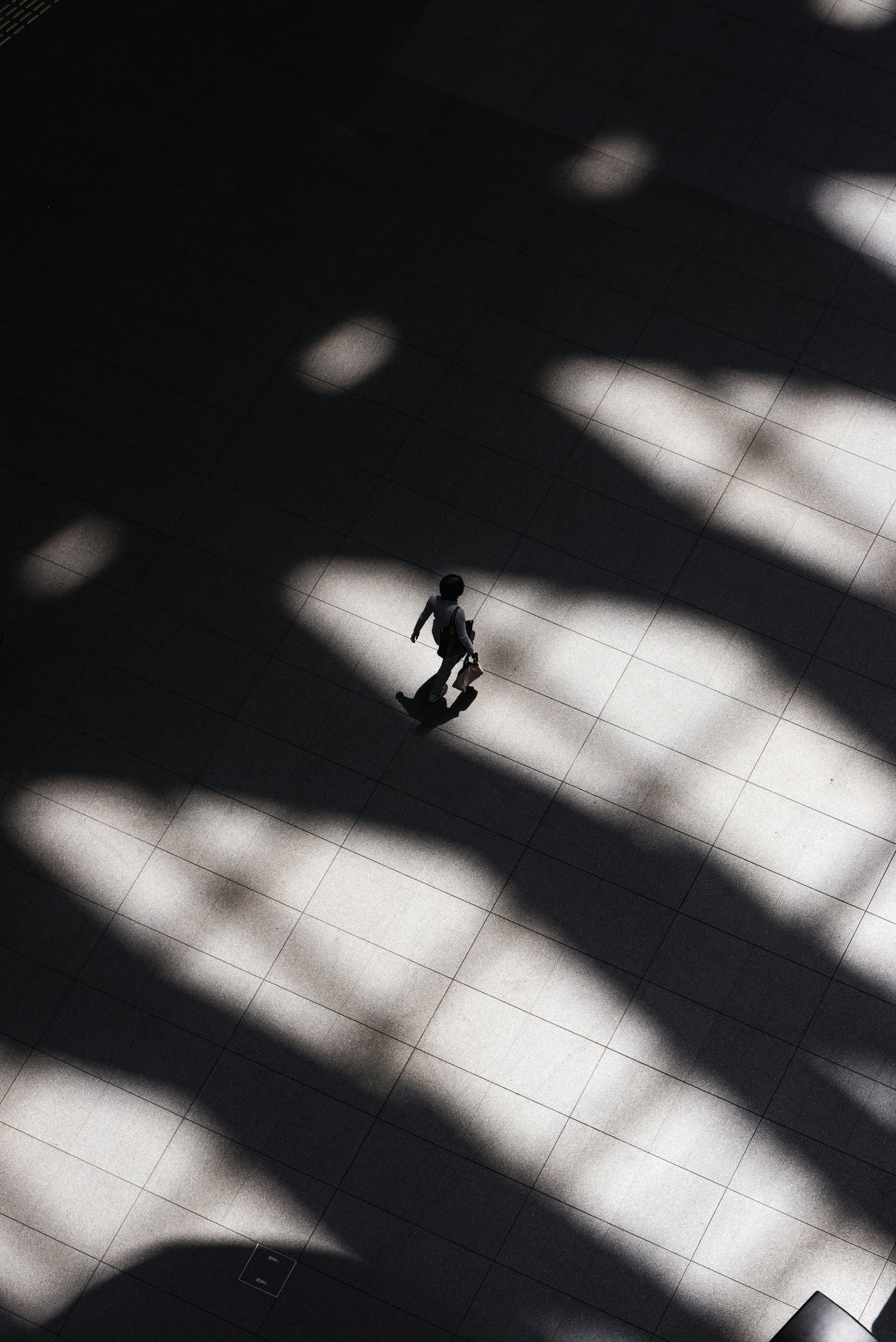
The Premise:
Observation is the practice.
Perception is the outcome.
Character is the life that follows.
We spend much of our lives trying to change what we do. Increasingly, I wonder whether the more meaningful work is cultivating how we attend.
Designers rarely begin by changing the world. They begin by paying attention.
Observation is not passive. It is one of the most generous acts we can offer another person, a way of being, or a system. To observe carefully is to say, “This is worth understanding before I attempt to change a perception, a situation, or a system.”
Perception is how we make meaning of the world. It belongs to all of us. It is shaped not only through sight, but through memory, culture, experience, curiosity, intuition, and the countless ways we learn to inhabit the lives of others. The way we perceive the world is inseparable from the way we participate in it.
Perhaps this is why attention matters so deeply. Attention becomes perception. Perception shapes judgment. Judgment guides action. Action, repeated over time, forms character. And character, lived consistently, becomes a life.
This essay is an invitation to explore a question I continue returning to:
How might we cultivate the kind of attention that allows us to build lives, organizations, and relationships worthy of our care?

Like many designers early in my career, I spent years studying remarkable work and wondering what distinguished those who consistently created it. Was it talent? Taste? Experience? Or was there something deeper that allowed certain designers to perceive opportunities, patterns, and possibilities that others overlooked?
Several years ago, I encountered a book called The Eye, which explored how some of the world’s most influential creative directors developed their perspective. I expected to discover techniques for refining my taste or frameworks for recognizing good design. Instead, I found something far more enduring.
Permission.
Not permission to imitate remarkable designers, but permission to trust that perspective itself is something worth cultivating. That every designer—and perhaps every person—possesses a way of “seeing” that cannot be replicated because it has been formed through a lifetime of experiences, observations, and questions. The work is not to replace that perspective with someone else’s, but to deepen it.
At first, I understood this as a lesson about design.
Over time, I realized it was a lesson about living.
Developing an eye was never simply about recognizing well-designed objects or thoughtfully composed spaces. It was about learning to notice what deserves our attention, and allowing that attention to quietly shape the way we move through the world.
Paying Attention as a Design Practice
The quality of our lives is shaped by the quality of our attention.
Design education often emphasizes methods. We learn to conduct research, map systems, prototype ideas, and facilitate conversations. These practices provide structure for solving complex problems, yet beneath every methodology lies a quieter discipline that receives far less attention.
Observation.
The longer I have practiced design, the more convinced I have become that observation is not simply the first step of the process—it is the foundation upon which every thoughtful decision rests. Before we can improve a system, we must first understand it. Before we propose solutions, we must develop the patience to notice what is already there.
This way of seeing asks something different of us. It asks us to slow down long enough to distinguish symptoms from causes, assumptions from evidence, and noise from signal. It encourages curiosity before certainty and understanding before intervention. Over time, observation becomes less of a professional technique and more of a disposition toward the world.
I have found that this habit rarely remains confined to design. It begins to influence how we move through everyday life. We become more attentive to the environments we inhabit, the conversations we participate in, and the people with whom we share our time. We notice the colleague who has withdrawn from discussion, the public space that quietly invites belonging, the object whose quality reveals itself only after years of use. Gradually, we begin to understand that what we notice is never incidental; it reflects what we have learned to value.
Perhaps this is why I increasingly think of attention as more than a design skill. Attention is formative. It shapes not only the work we create, but the people we become. What we repeatedly choose to notice begins, almost imperceptibly, to shape what we care about. And what we care about, in turn, quietly shapes the lives we build.
Questions as a Way of Seeing
Understanding begins when certainty gives way to curiosity.
Before I studied design, I studied sociology and criminology. I was drawn to ethnography and to the quiet discipline of observing what others might pass by: the informal rules within a group, the structures hidden beneath ordinary behavior, and the small interactions that reveal how institutions are truly experienced. I was fascinated not only by what happened, but by the systems, histories, and relationships that made it possible.
At the time, I thought I was preparing to study human behavior. Looking back, I was also learning how to cultivate an eye.
Ethnographic observation asks us to resist the comfort of immediate interpretation. It requires us to remain with uncertainty long enough for a more complex understanding to emerge. We observe first, seek context, question our assumptions, and allow what we encounter to complicate what we thought we knew. This is not passive looking. It is a disciplined form of curiosity.
That orientation has remained central to my design practice. Although the medium changed, the underlying questions did not:
How do people navigate a system? What is shaping their behavior beneath the surface? Who feels invited to participate, and who does not? What appears ordinary only because we have stopped examining it?
The answers rarely announce themselves. They are often found in contradictions, omissions, workarounds, gestures, and patterns that become visible only through sustained attention.
I have come to believe that questions carry a quiet form of power. Not the overt power of directing others, but the agency that comes from deeper understanding. A thoughtful question can interrupt an inherited assumption, reveal a possibility that certainty had concealed, or redirect attention toward the people and experiences a system has ignored. Questions do not weaken judgment. They create the conditions for better judgment.
This has shaped the way I think about influence as well. Influence need not begin with persuasion or visibility. It can begin with noticing, questioning, observing, and connecting. When we understand a situation deeply enough, thoughtful action becomes possible, and influence often follows as a consequence rather than a performance.
Perhaps cultivating an eye is not simply learning to notice more. It is learning how to inquire into what we notice—to ask what lies beneath it, what shaped it, whom it serves, and what it might become.

Designing Character
Our habits become our identity long before they become our reputation.
One of the ideas that has stayed with me throughout my design practice is that systems are rarely transformed by singular interventions. Lasting change emerges through many small decisions that gradually reinforce one another until a new pattern becomes visible. Good design is seldom the result of one brilliant idea; it is the consequence of thoughtful iteration, careful refinement, and an unwavering commitment to coherence.
Increasingly, I have come to believe that character develops in much the same way.
We often imagine integrity as something revealed during life’s defining moments. While those moments certainly matter, they are relatively rare. Far more often, character is shaped quietly through the ordinary decisions that receive little recognition. It is formed in how we prepare before a meeting, whether we follow through on commitments, how we respond when no one is keeping score, and the standards we choose to uphold even when convenience would invite compromise.
Perhaps this is why I find myself thinking less about designing products or spaces and more about designing practices. Every repeated action becomes a kind of prototype for the person we are becoming. Over weeks, years, and decades, these seemingly insignificant choices accumulate into something remarkably coherent. Eventually, they become indistinguishable from our character.
Design has taught me that consistency is rarely restrictive. Instead, it creates the conditions under which trust can grow. I increasingly wonder whether the same is true of people, that trust is at the heart of all design and perception.

Leadership Through Attention
The way we lead is ultimately an expression of what we choose to notice.
Design has also reshaped my understanding of leadership. Early in my career, I assumed that influence belonged primarily to those with the clearest vision or the strongest voice. While clarity certainly matters, experience has gradually complicated that assumption.
The leaders who have left the greatest impression on me possessed a different quality altogether. They were deeply attentive.
They noticed when a colleague had been unusually quiet during a meeting. They remembered details from conversations months earlier. They prepared thoroughly because preparation communicated respect for other people’s time. They asked thoughtful questions before offering confident answers. Their authority did not diminish their curiosity; rather, it seemed to deepen it.
Over time, I began to recognize that this attentiveness was not separate from their leadership. It was the foundation of it.
Design teaches us that understanding must precede intervention. We do not begin by changing a system; we begin by observing it carefully enough to understand what is truly happening. I have come to believe that leadership follows the same principle. Before we can guide people well, we must first learn to see them well.
Perhaps the leaders we remember most are not those who demanded attention, but those who gave it generously.
A Life Worth Living
Perhaps the greatest design project is the one we inhabit every day.
When I first encountered The Eye, I believed I was searching for a way to develop better taste. Looking back, I can see that I was searching for something much more fundamental. I wanted to understand how a person develops a perspective that feels unmistakably their own.
The answer, I have come to believe, has very little to do with aesthetics.
Perspective is not formed through extraordinary moments of inspiration. It is cultivated through ordinary acts of attention repeated over time. The books we return to. The conversations we continue thinking about long after they have ended. The questions we refuse to stop asking. The people whose lives quietly shape our own. These become the raw materials from which perspective is formed.
For me, this has become one of the most enduring lessons design has offered. Good design is not simply about creating better products, services, or institutions. It is about learning to move through the world with greater intention. It invites us to consider not only what we make, but whom we are becoming in the process of making it.
Perhaps this is why I no longer think of cultivating an eye as a professional ambition. I think of it as a lifelong practice. A practice of learning what deserves our attention, what is worthy of our care, and what kind of person we hope those choices will shape us into.
The longer I practice design, the more convinced I become that the most enduring thing any of us will ever create is not our portfolio, our résumé, or even our body of work.
It is the pattern of a life.
Which leaves me returning, again and again, to the same question:
How might we cultivate the kind of attention that allows us to build lives, organizations, and relationships worthy of our care?
Developing an eye, I have come to believe, is not ultimately about learning to recognize exceptional design.
It is about learning to recognize what deserves our attention.
Because attention cultivates perspective.
Perspective shapes judgment.
Judgment guides action.
Action, repeated over time, forms character.
And character, lived with integrity, becomes a life worth living.
Perhaps the greatest design project is not the work we leave behind, but the person we are becoming while creating it.
Some final musings…
The longer I practice design, the less I believe developing an eye is about learning to see more. I think it is about learning to attend more deeply. And perhaps that has been the lesson all along. Not simply how to design better work, but how to become a person capable of creating it.