Designing Institutions People Want to Belong To
What museums taught me about trust, relationships, and organizational leadership.
The Question
I’ve been wondering why some organizations become part of people’s identity while others remain places people simply visit.
It’s a question I’ve carried with me for much of my career, although I didn’t always recognize it. At the time, I thought I was moving between disciplines: museum marketing, exhibition design, higher education, fundraising, community engagement, and the art market. Looking back, I see something different. I wasn’t changing directions so much as examining the same question from different vantage points.
The longer I’ve worked with institutions, the less interested I’ve become in how they communicate and the more interested I’ve become in why people choose to trust them.
Communication Opens the Door
Communication introduces people to an institution. Experience determines whether they return.
For years, I assumed that trust was largely built through communication. Better branding. Clearer messaging. More effective outreach. Those things certainly matter, but over time I began to notice that communication rarely creates trust on its own. At its best, it opens the door. What happens after someone walks through that door determines whether a relationship is formed.
That realization didn’t arrive all at once. It emerged slowly through a series of experiences that at first seemed unrelated.
Remove Barriers
Participation begins when people feel invited into the conversation.
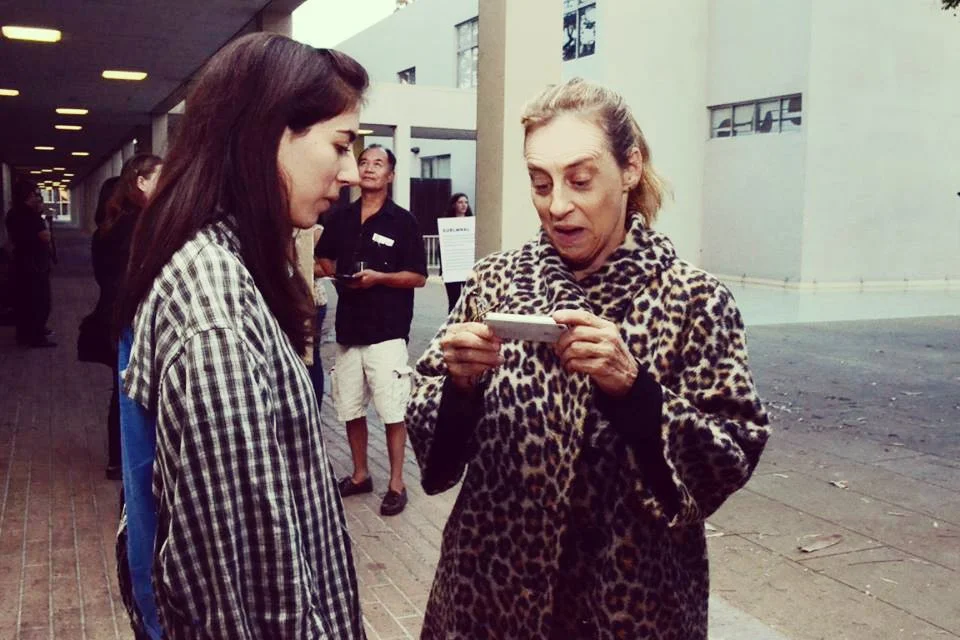
Image of artist Teresita de la Torre interacting with a patron during a Formation Gallery show.
One of the earliest was Formation Gallery, a contemporary art space I founded out of curiosity about what would happen when some of the invisible barriers surrounding contemporary art were removed.
Rather than separating artists from audiences through formal talks or carefully structured programs, we invited conversation. Visitors stood beside artists, asked questions, shared stories, and spoke about creativity as something deeply human rather than something reserved for experts.
One evening, a visitor quietly told me they had never stepped into a contemporary art gallery before. By the end of the exhibition, they weren’t talking about the artwork anymore. They were talking about the museums they wanted to visit, the artists they planned to follow, and the creative work they wanted to begin making themselves.
That conversation stayed with me.
The exhibition hadn’t simply introduced someone to contemporary art. It had shifted what they believed was possible for themselves.
Design Shapes Experience
Every design decision quietly communicates who belongs.
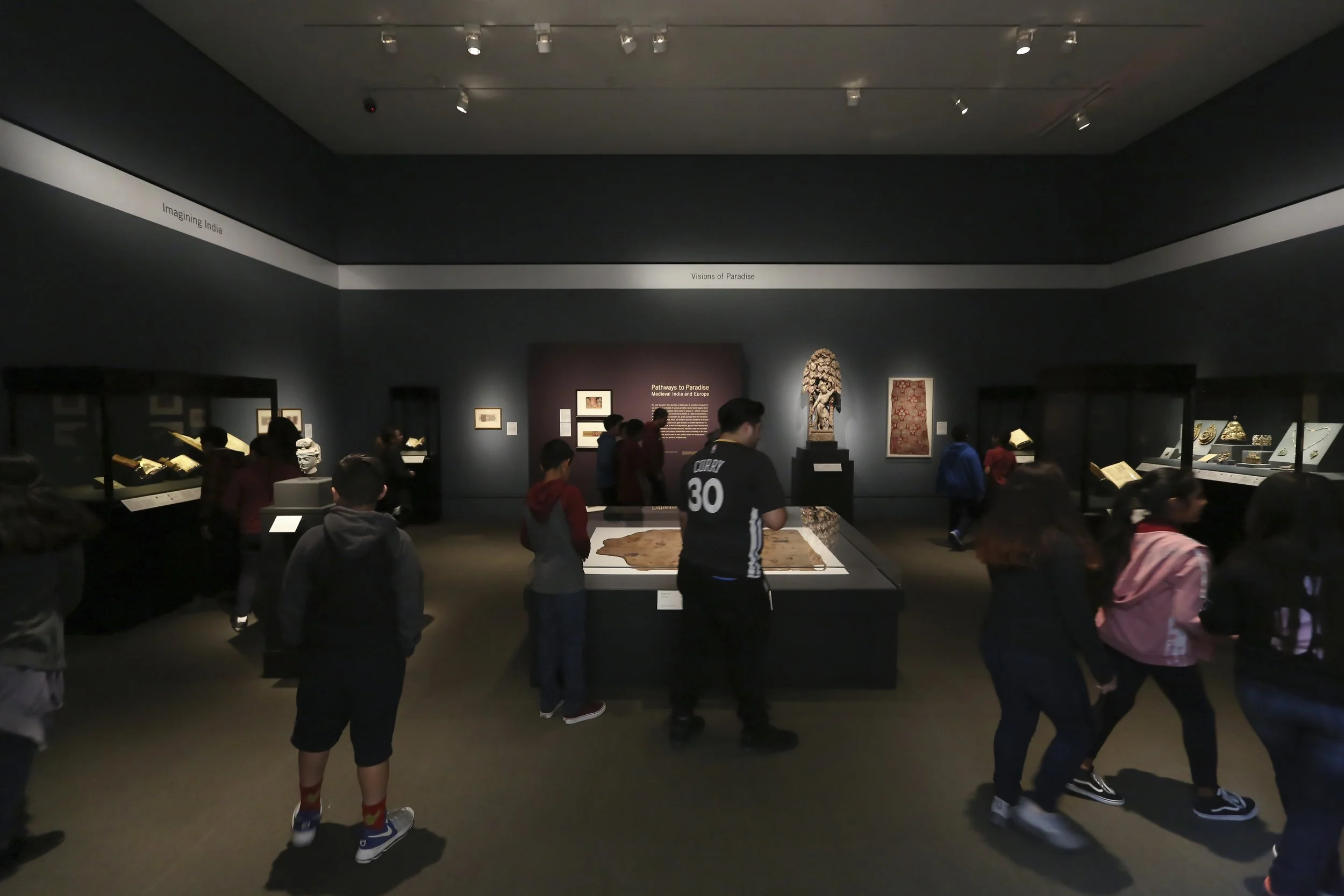
Image of Pathways to Paradise, J. Paul Getty Exhibition, lead exhibition designer
Years later, while working on exhibition design at the Getty, I encountered the same question from a completely different direction.
Before arriving there, I thought accessibility was primarily about removing physical barriers. What surprised me was how often the conversation centered on interpretation instead. Every decision—from typography and exhibition labels to gallery flow and interpretive design—asked a deceptively simple question: Who might unintentionally be excluded by this experience?
Accessibility wasn’t only about whether someone could enter the gallery. It was also about whether they could understand it, navigate it, and recognize themselves within it.
I began to appreciate that design is never neutral. Every institutional decision quietly communicates who belongs, who is expected, and who may feel like a visitor in someone else’s world.
Finding a Voice
Confidence grows when people discover they have something worth contributing.
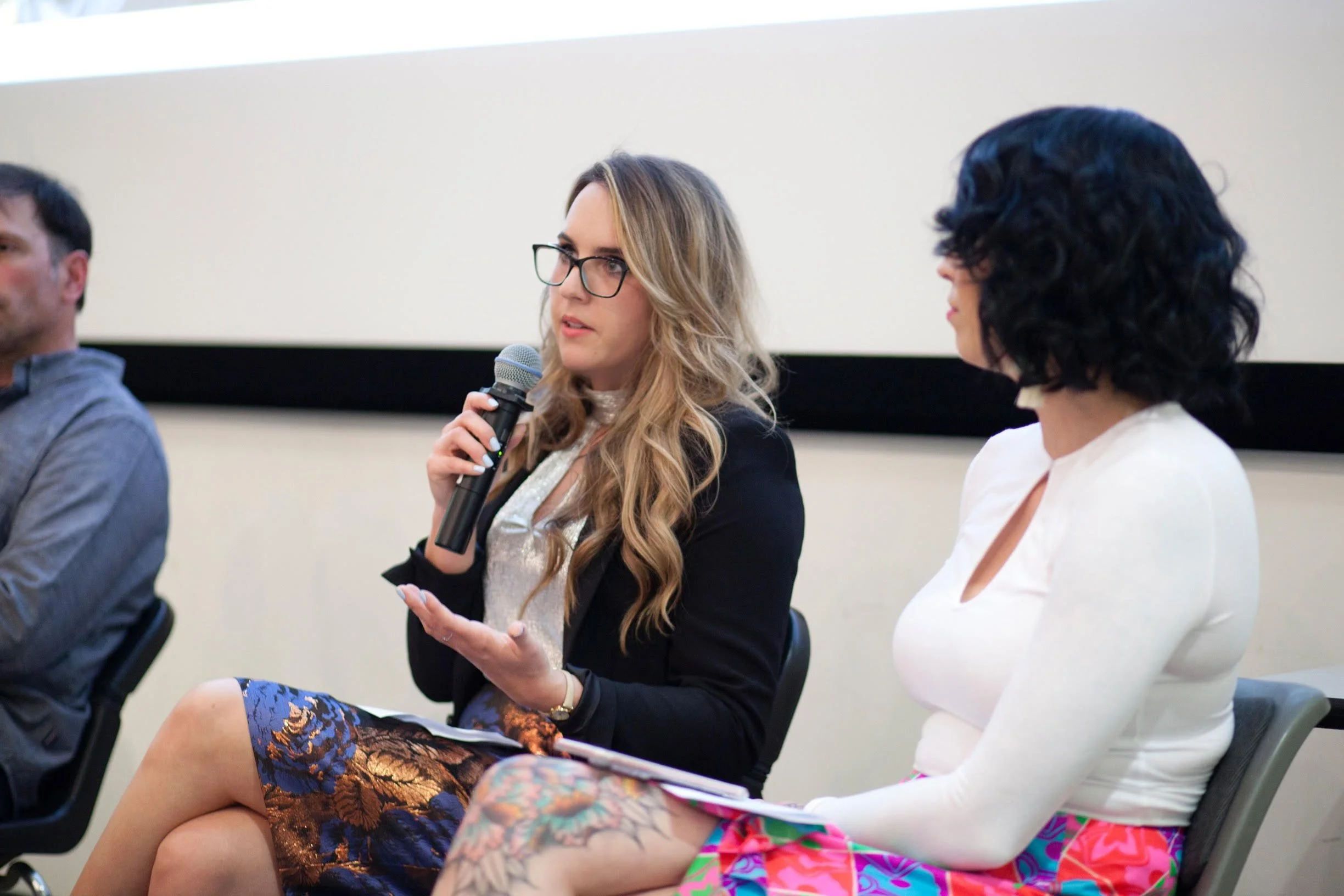
Image of me speaking at Reclaimed Landscapes: The Art of Jarod Charzewski
Teaching revealed the same pattern again.
Over the years, I taught students from remarkably different backgrounds, many of whom arrived believing creativity belonged to someone else. They questioned whether they were talented enough, whether they belonged in college, or whether they had anything meaningful to contribute.
Initially, I believed my responsibility was to teach software, design principles, and visual communication.
Somewhere along the way, my students taught me something different.
The lessons they remembered years later were rarely about technical skills. They remembered discovering confidence they didn’t know they possessed. One student became an art director. Another, a student with autism, confidently presented a complete visual identity redesign to executive leadership while I sat quietly in the meeting, watching someone who had once doubted herself lead the conversation with remarkable clarity. Other students shared more personal stories—telling me that creative work had helped them navigate periods when they questioned whether life itself was worth continuing.
Those moments fundamentally changed how I understood education.
Teaching wasn’t simply about transferring knowledge.
It was about creating an environment where people could begin to recognize possibilities they hadn’t yet imagined for themselves.
Relationships Before Transactions
Trust is built through care, consistency & time.
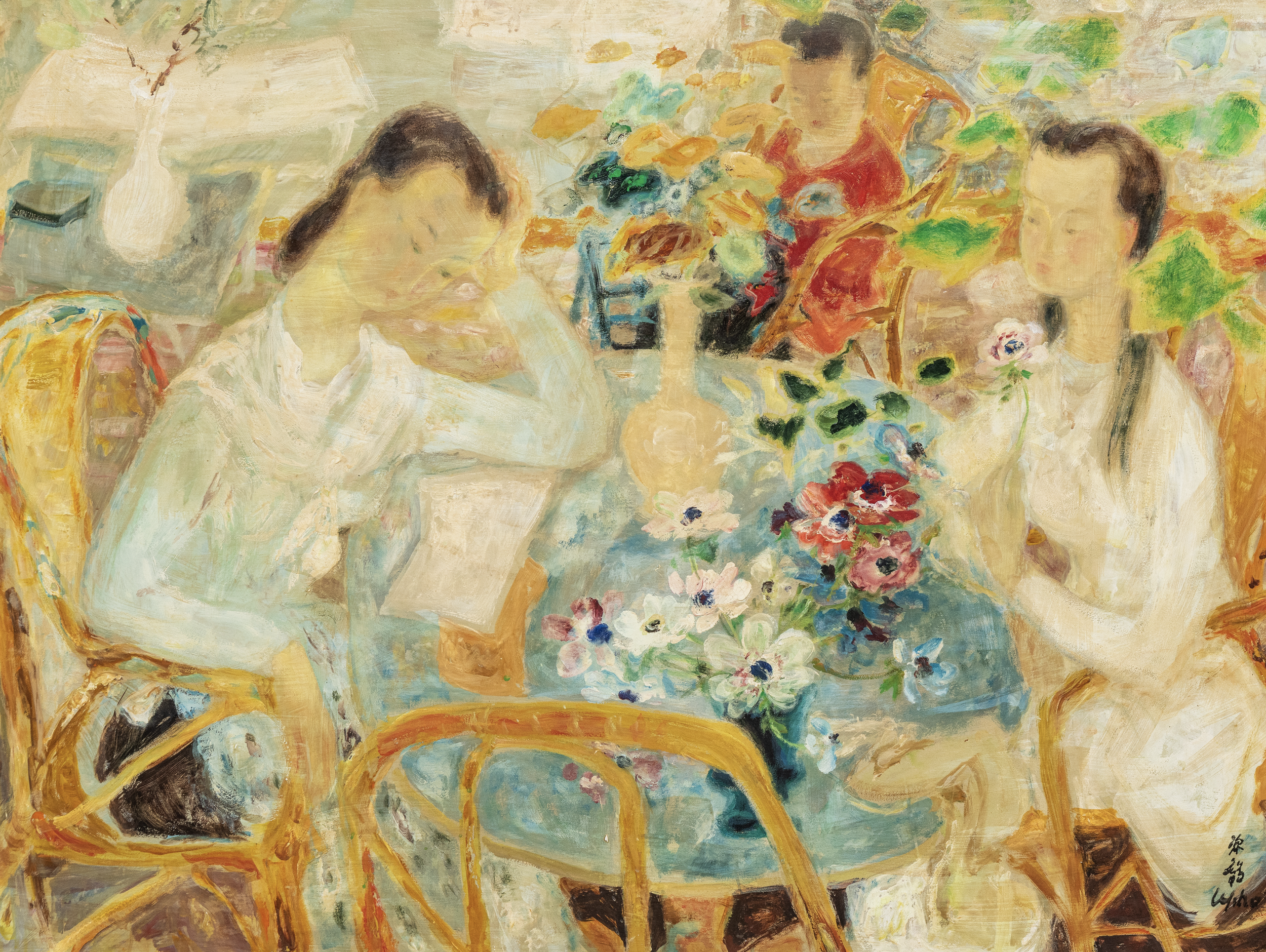
An image of the Le Pho artwork titled La Lettre
More recently, I’ve found myself asking similar questions in the art market.
Families often come to us after losing someone they love. They aren’t simply bringing artwork; they’re bringing family history, memory, and sometimes grief. Before researching provenance or discussing market value, I spend time listening to how the work entered their lives, why it mattered, and what it represented.
Not long ago, one family entrusted us with a Le Pho painting that had remained in their family for generations. Months of provenance research, careful marketing, and thoughtful auction strategy ultimately resulted in a record-breaking sale.
Yet what they remembered most wasn’t the price achieved.
It was that someone had cared enough to understand the painting before treating it as an asset.
Trust had little to do with the auction itself.
It had been built long before.
Seeing Ourselves Reflected Back in Institutions
People return when they can imagine themselves as part of the institution.
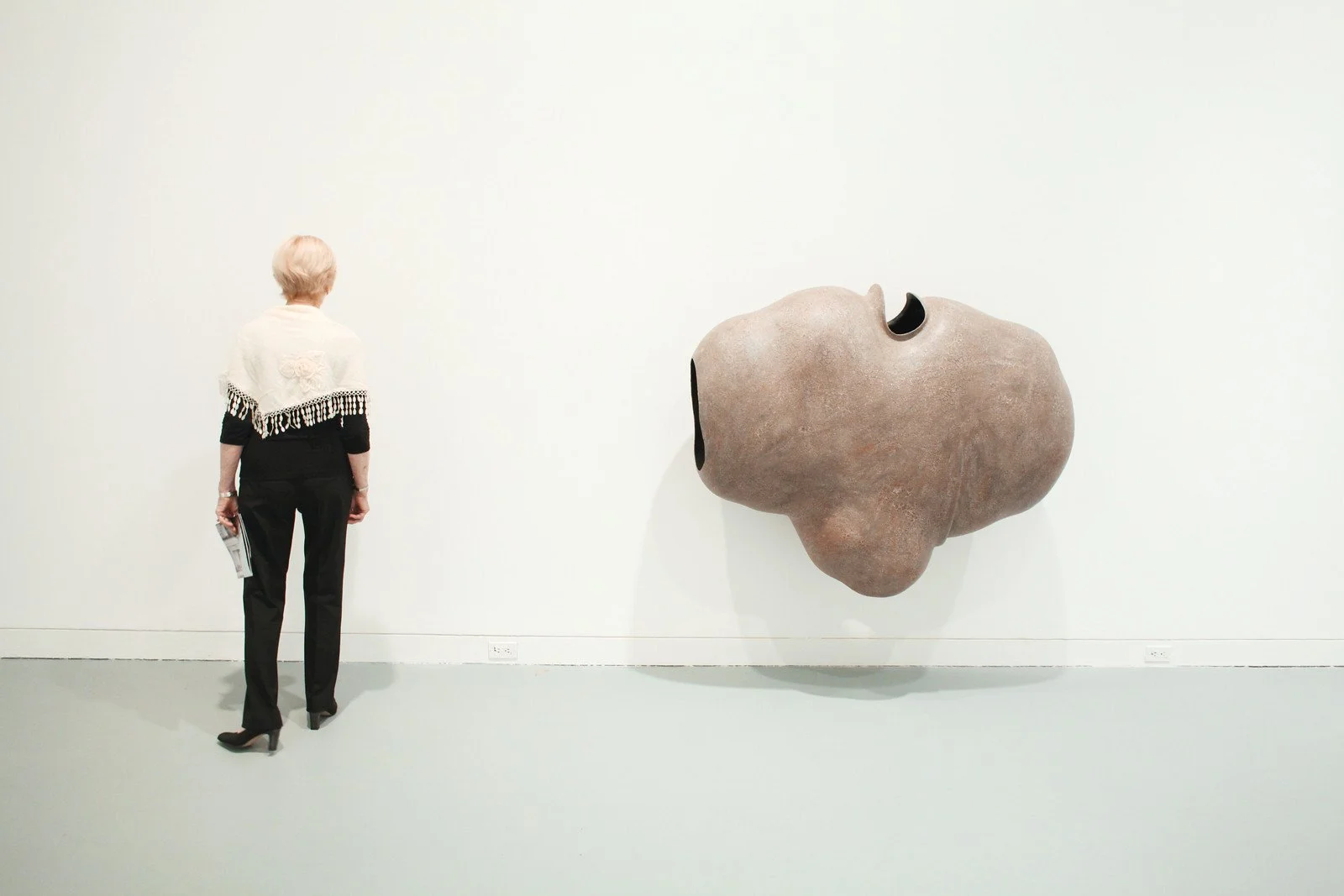
Looking back, I see the same pattern in my work at the Orange County Museum of Art.
People often assume attendance increases because marketing improves. That wasn’t my experience.
Certainly, branding became more consistent, and communication became clearer, but those were only expressions of something deeper. What changed was the relationship between the museum and its community. Programming reflected a broader range of voices. Artists represented experiences more people recognized as their own. Marketing became less about encouraging attendance and more about extending an invitation.
I remember someone telling me they had never believed the museum was meant for people like them.
Later, they returned.
Not because they had been persuaded.
Because, for the first time, they could imagine themselves there.
That distinction has stayed with me.
Looking back…we shape what people believe is possible.
Across these experiences, I’ve gradually come to believe that institutions are constantly shaping something far more significant than attendance, membership, or participation.
They shape what people believe is possible.
The strongest institutions don’t simply preserve culture or communicate a mission. They create conditions where people begin to see themselves differently, where visitors become participants, students become leaders, families become partners, and communities recognize that they have a place within something larger than themselves.
Perhaps that’s why my career has never fit neatly into a single discipline.
Marketing, design, education, fundraising, public engagement, and partnerships were never separate pursuits. They were different ways of exploring the same enduring question.
How do institutions earn trust?
How do they remove barriers that quietly tell people they don’t belong?
And how might we design organizations that invite more people to participate—not because they were persuaded to, but because they genuinely feel their presence matters?
I don’t pretend to have definitive answers.
But I have come to believe that the future of our institutions depends less on how effectively they communicate and more on how intentionally they cultivate relationships, curiosity, and trust.
The organizations that stay with us aren’t always the ones that teach us the most or have the strongest brands.
They’re the ones that quietly change our understanding of whether we belong there in the first place.